Trending · Denver Today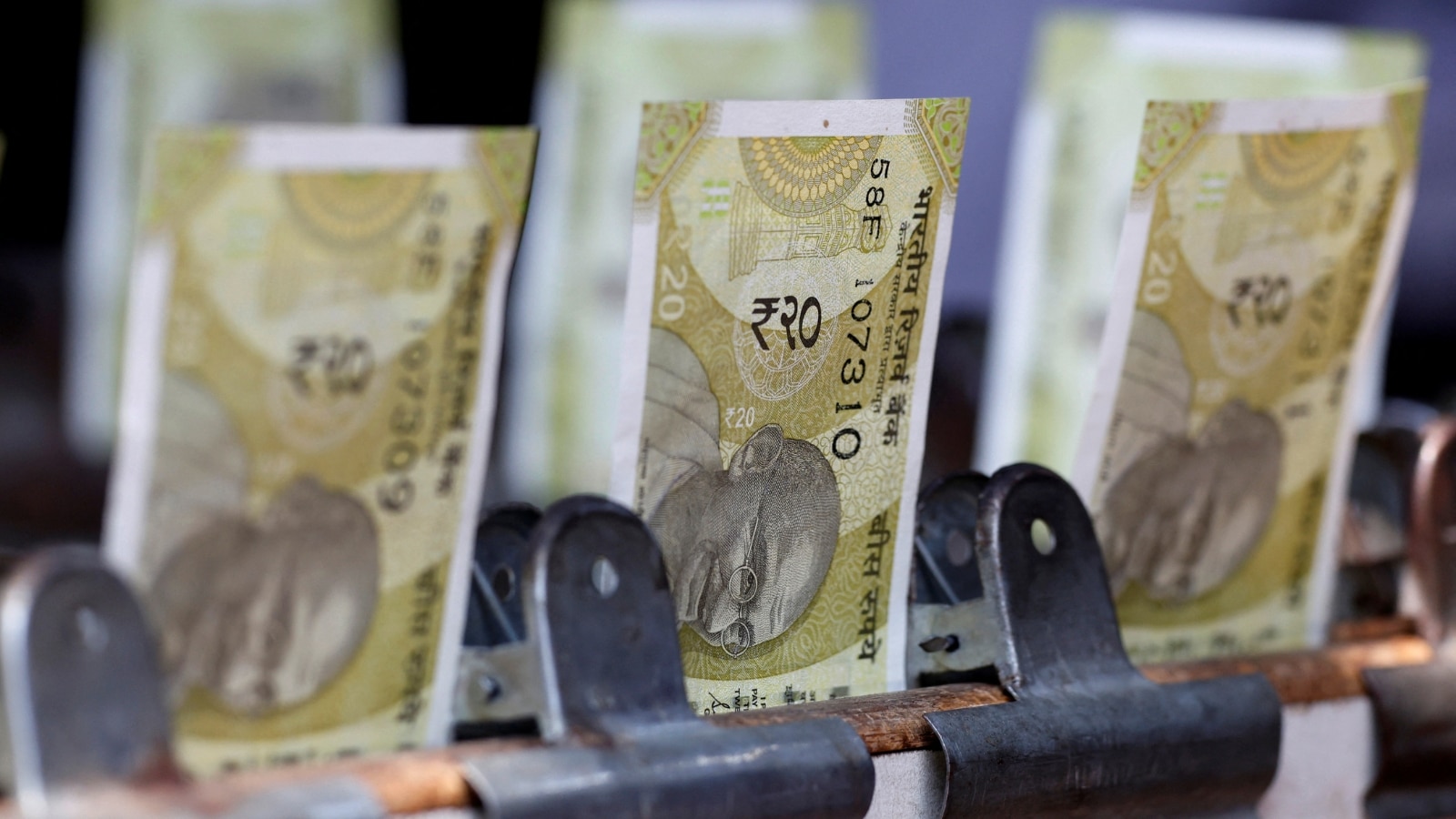
Kamakshya Trivedi, Head of Global FX, Interest Rates and Emerging Markets Research at Goldman Sachs, expects the Indian rupee to remain largely range-bound despite strong inflows through Foreign Currency Non-Resident (FCNR) deposits and the Reserve Bank of India (RBI) intervention. He sees the rupee around 96 in the near term and gradually moving towards 97 over the next 12 months, as high oil prices and subdued underlying inflows continue to weigh on the currency. Trivedi also expects the Reserve Bank of India to raise policy rates by 50 basis points around December-January-February, particularly if the US Federal Reserve starts hiking rates.
However, he says India’s resilient growth story could eventually bring foreign portfolio flows back, provided energy prices soften and investors become more comfortable with the impact of global shocks on the economy. This is an edited transcript of the interview. Q: The Indian rupee continues to be at the vortex of several pulls and pushes.
The rise in US yields, as well as the continued high price of crude oil, is keeping pressure on the currency. But higher-than-expected inflows via FCNR deposits are keeping the rupee from falling, as is the constant RBI dollar selling from its now-refurbished arsenal. First up, we would want to know about US yields at 19-year highs now, whether you take the 10-year or the 30-year.
What's your sense? Are we likely to see higher highs? A: I think it's important to understand why we are here, why we are at these high levels of yields.
And I think that there are a few fundamental macro factors that have driven us here that are not necessarily going away. The chief amongst those is the underlying fiscal deficits that are there in many other parts of the world, but also very prominent in the US, particularly at a time when the economy is doing pretty well. I think it's that combination of a large fiscal deficit, significant government financing needs coupled with robust growth that are setting the environment for higher yields.
That has come alongside also higher oil prices, due to the war in Iran, and perhaps some expectations that the Fed may need to move rates higher. Of those, it's possible that the war ebbs and flows, that oil prices perhaps come down somewhat. That may help ease some of the pressure on yields.
But the underlying macro pressure that is coming from higher spending and higher investment, both in the public and in the private sector, that's not going away anytime soon. And so, yes, can you see yields come back down somewhat from the kind of 19-year highs or the 20-year highs that you mentioned? Yes, that's our expectation, that you will see a little bit of a moderation in yields, but I would caution, I think that moderation or that relief is going to be pretty shallow.
We're still probably going to end the year with 10-year rates close to 4.5%, if not slightly above. Q: What is your sense about what the Federal Open Market Committee (FOMC) might do in September and again later on this year? The market is now pricing a much higher probability of hikes, one or two maybe.
A: Chairman Warsh was certainly pretty hawkish in his assessment of the economy and of inflation in particular at his Jackson Hole remarks. I think that's important. I think that's partly why the market is pricing in a decent chance of hikes in September.
I think market pricing has something like 40 basis points of hikes now priced between now and the end of the year. Our own expectation is that while you can certainly get a hike in September, we think inflation, both on the core Personal Consumption Expenditures (PCE) measures and the core CPI measures, should be quite moderate, quite quiescent, and that should basically stop them from hiking and remain on hold. But it's going to be a close call.
You've certainly had a very clear, hawkish assessment of the inflation trajectory from Chair Warsh. I think that that's also important to the long end of the rate curve. Again, something that we started off discussing.
I mean, if you think about it, how do you anchor long-end rates? Well, there's two fundamental levers you can pull. One is actually make some effort to get the fiscal position under control.
There doesn't seem to be very encouraging signs on that front, but you can also get more hawkish policy at the front end, and that can anchor the long end. And we've seen a little bit of a step in that direction from Chairman Warsh's remarks at Jackson Hole, but it's important that there is a follow-through because if not, I suspect we're going to be back in the same place before too long. Q: What does all this mean for us?
The surprising part is the dollar has not rallied that much as one would have expected. So please explain that first to us, and then I want to speak about how it may impact our rates and currencies. A: You're absolutely spot on, which is I think the interesting juxtaposition here is that you've seen rates move up, move up quite a lot, both at the front and at the long end, particularly.
But you've actually seen the dollar trade softer over the summer in July and in August. Why is that? Well, we think there's a couple of reasons for that.
First, I think it's the fact that you've seen quite a lot of policy volatility and actually quite interventionist policy, right? You take, for example, the combined intervention between both the Japanese authorities, but also, pretty unusually, the US authorities to push the yen stronger. I think that weighed on the dollar a little bit.
And then the unusual announcement to facilitate liquidity or double the amount of liquidity in these Treasury buyback operations. That was also important because it sent a very clear signal to investors, and the signal was that policy authorities do care about the level of yields, they do care about the price of bonds, and they want to stabilise that. But that may come at the expense of a weaker dollar.
That may come at the expense of a cheapening on the currency, and they're okay with that is the signal that investors took away from it. And therefore, you saw the dollar weaken even as yields have been on a higher plateau. And I think that it's beyond those individual actions themselves, which were small in the larger scheme of things.
I think it's that signal that investors have taken from these measures that you could see more potentially unconventional actions that support other asset markets, whether it's the yen, whether it's the US Treasury market, but that support could come at the expense of the dollar. I think that's why the dollar has weakened. That's why it's on the back foot.
Q: What about what happens to India? The rupee in particular, we've seen these fairly substantial flows coming in, probably north of $90 billion when the final count is known, but is that enough? Should we see some kind of a rupee rally now because we seem to have taken the oil price in stride?
A: A great set of questions. Let me break up my response in a couple of parts. The first is, when we think about the kind of pressure from higher US rates, higher core rates globally, and how it impacts India, how it impacts the rupee, it's always important.
I think a couple of points are relevant. First, where is that pressure coming from? What is the source of that pressure?
And in this case, the source of that pressure is largely still a robust growth backdrop, a big investment boom, the spending needs of the government that I mentioned earlier. So that's a better backdrop for higher rates. Emerging markets tend not to have as much pressure when it's stronger growth that is leading rates higher than hawkish policy shocks.
That's the first thing. The second thing, what I already mentioned, that this move higher in rates is coming alongside a weaker dollar. That reduces the transmission, that reduces the pressure that emerging market currencies like India face when you do see higher rates.
So, I think that from the global standpoint, yes, rates are higher. Yes, it's an important headwind, but perhaps there are a couple of mitigating factors for a country like India, for emerging markets than other periods or other episodes where rates may have been as high. Now, you mentioned the India side of things.
That's relevant as well. There have been significant measures by the RBI. You mentioned the FCNR flows have been quite meaningful, and you've seen intervention.
So, you put all of that together, our expectation is still that the rupee is going to trade somewhat range-bound. If you look over the last several months, pretty much since May, after the first most intense period of the war, the rupee sort of traded in a range between 94 and 97. Our expectation is, in the near term, 96 is roughly where we think that's going to be, gradually moving up towards 97 in 12 months' time.
So, a pretty range-bound rupee, and that reflects that, yes, you've seen those inflows, but it also reflects that in the medium term, the underlying macro dynamics haven't changed. Oil prices are still pretty high. Inflow picture outside of these special measures is still pretty tepid, and if you do start to see significant inflows, we think the RBI will also have to keep an eye on its forward book.
So, we're not expecting a big INR rally like you asked. We are expecting a flatter INR after the kind of sharp depreciation that we saw earlier in the year. Q: I wanted to ask you about the Reserve Bank's rate policy as well.
It's a fairly steaming growth number we have got for the first quarter, and there is this possible pressure of the US Fed hiking rates, maybe in September, if not in September, maybe later on in the year. So, does this look like a Reserve Bank which will have to or is better advised to hike rates? A: Our expectation is the Fed is probably going to remain on hold for the rest of the year.
We think the inflation picture will remain moderate enough for them to do that. But it's certainly the case that if you do see the Fed move rates higher, given the fact that the spread between US Fed funds rate and, say, India's policy rate, but really a lot of policy rates across Asia, are actually some of the narrowest they've been. Even if you look at swap rates at the longer end, five-year, 10-year, these spreads have narrowed considerably relative to the last decade, I would say.
In that sort of environment, if the Fed is moving higher, I think it's going to create an environment where a lot of central banks, and I think the RBI is no exception to that, will feel the pressure to move rates higher. But it's not just because of external pressure. It's also on the internal side, something you mentioned.
Growth has been very resilient, even in India, even in the face of what is an extraordinary energy shock. Indian growth has been really quite remarkable. So, if your starting point is fairly remarkable growth, fairly resilient growth, if you have then a kind of very narrow spread and the Fed is moving rates higher, I think the likelihood is that most forecasters are going to call for RBI policy rates to move higher.
That's our forecast as well. We expect 50 basis points of hikes between December, January, February next year, or that sort of horizon. But I think a lot depends on how and how fast the Fed decides to move.
Watch the full conversation here Q: Is not the India growth story good enough to bring back foreign flows, either as foreign direct investment (FDI) or as Foreign Portfolio Investment (FPI)? They've largely shunned India, or they have been flat, indifferent to India. Do they return with this good growth story?
A: So, you've seen a little bit of a pickup in the last couple of months in the portfolio flows already. So, it's not you're not quite seeing the kind of outflows that you saw again in the first few months, immediately after the conflict. You have seen a bit of a pickup.
The market has kind of responded to that as well. And the growth story, you're absolutely right, is resilient, and I think especially the more the evidence mounts that things like AI, things like the energy shock are not necessarily as harmful to growth as the first analysis of people showed, I think the more investors will get comfortable with the broader growth story and return to India. But you do need, I would say, energy prices to soften, to decline, to really kind of bring that shine back on around the Indian growth story.
That's not where we are right now. Given what has happened, I think resilience and stability is probably the main thing to look out for. As the world turns and some of these shocks move around, I think that's when India will sort of have its moment in the sun.
Catch all the latest updates from the stock market here
Source: CNBC TV18